Maharishi AyurVeda Health Centre, MERU
A day worth repeating
Dinacharya, the Ayurvedic daily routine, as we would recommend you live it here.
From waking to sleep.
Ask Us to Call You Explore Panchakarma
The day has a grain to it
Dinacharya is the Ayurvedic daily routine — the order of a day, from waking to sleep, set out in the classical texts and unchanged for a very long time. It is one of the oldest ideas in Ayurveda and one of the simplest: the body does different things at different hours, and a day goes better when it is lived with that rather than against it.
That is why the largest meal is at midday, why the evening meal is small, and why nobody here will suggest anything strenuous at four in the afternoon.
One day, start to finish
A recommendation for how the day is best lived, not a timetable we operate or a schedule you are held to.
Before Six — Waking
Ayurveda asks you to be up before six, when the mind is at its clearest and the house is silent. The classical texts put it earlier still, at Brahma muhurta, about ninety minutes before sunrise. We would not ask that of you on your first morning.
Warm water, first thing. Then Jihva Nirlekhana — scraping the tongue — before you brush, and Gandusha, a mouthful of oil held for a few minutes.
Then warm oil over the body, Abhyanga, before you bathe. In the classical routine this is something you do for yourself every morning. While you are here it is given to you instead, later in the morning, by two therapists.
Early Morning — Moving, and Then Time
Movement, but gently. Ayurveda asks you to exercise to about half of what you are capable of, and to stop while you could still go on.
Maharishi Yoga Asanas, or a walk out into De Meinweg. The forest starts where the buildings stop.
Then there is nothing until breakfast, and that is deliberate. Three unhurried hours at the start of a day is a thing most people have not had in years.
09:00 — Breakfast
Light. Stewed fruit, warm cereal, something easy. A heavy breakfast sits on the whole morning.
Mid-Morning — Your Main Treatment
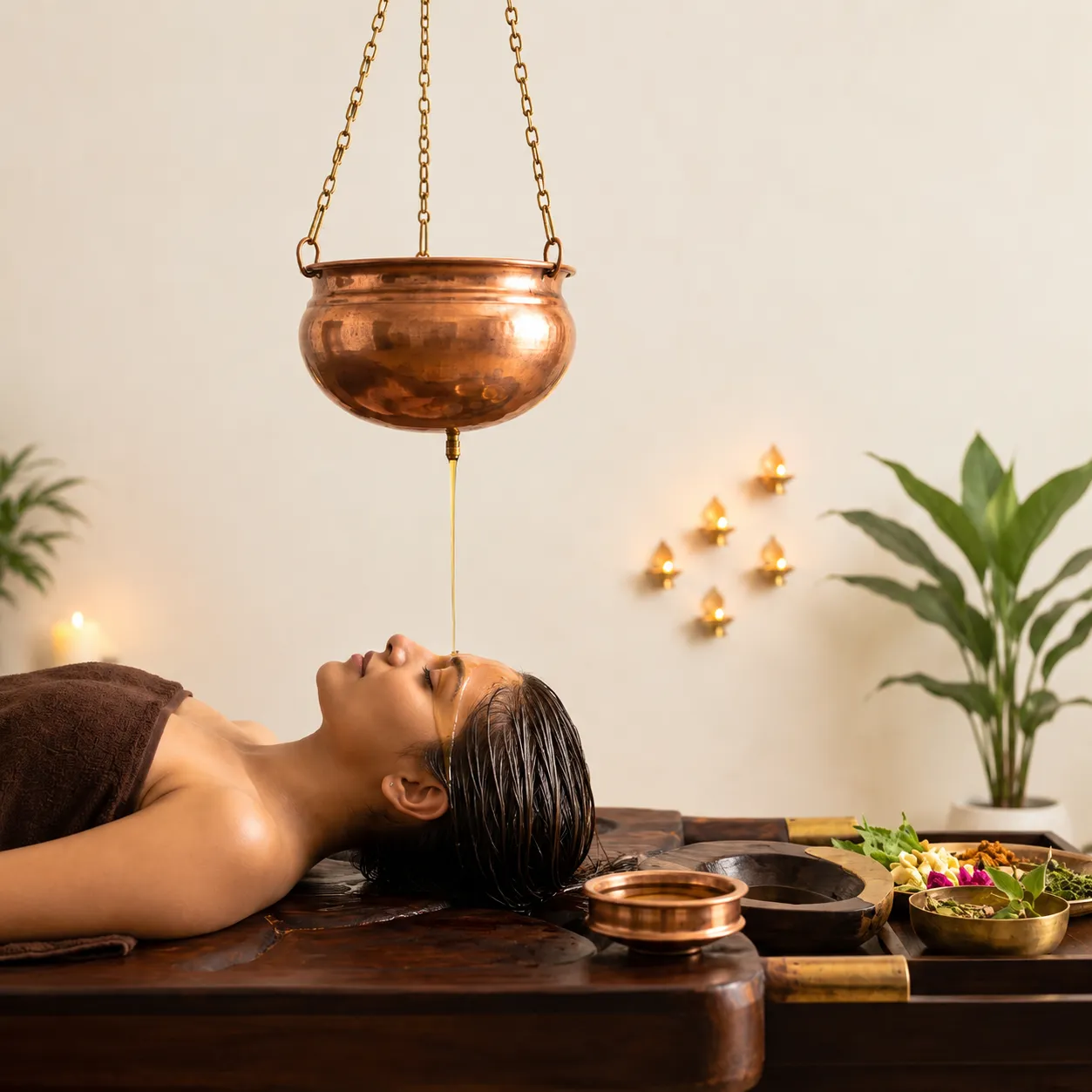
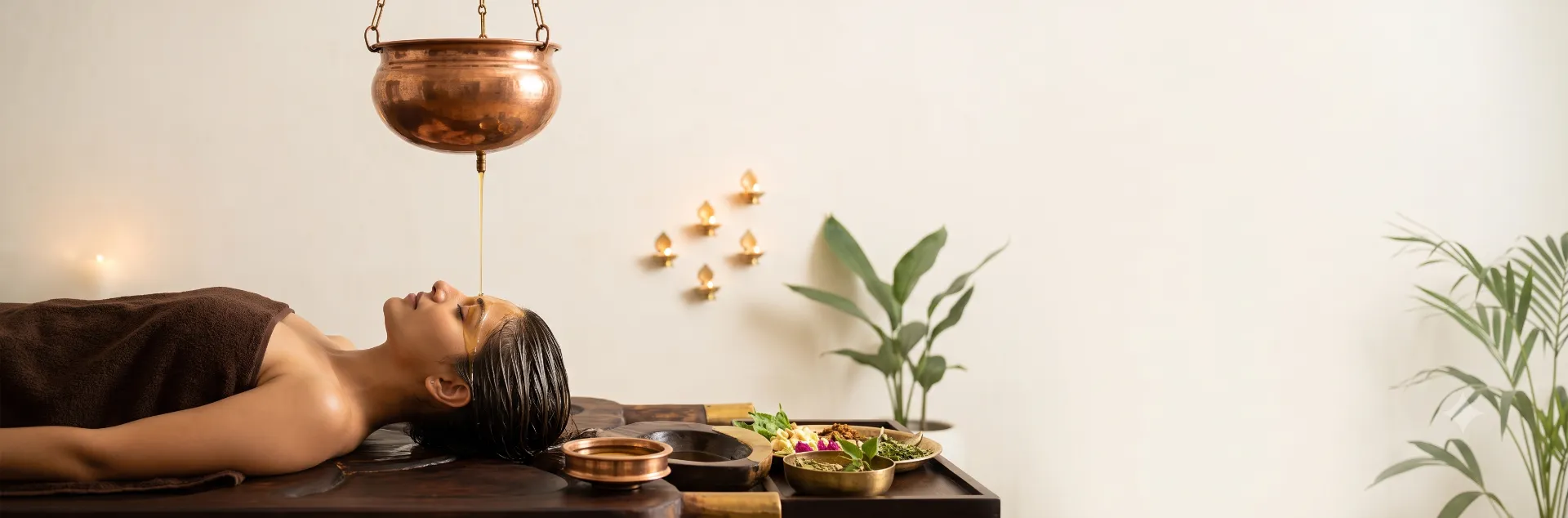
Warm oil, two therapists giving the treatment together in silence, and most treatments take an hour. Abhyanga on most days, often followed by Shirodhara or herbal steam.
The room is quiet and stays quiet.
After the Treatment
Rest, until lunch.
12:30 — Lunch, the Main Meal
The largest meal, taken when agni — the digestive fire — is strongest and the sun is highest. Three courses, organic, vegetarian, cooked on site that morning.
It is the easiest part of the whole routine to keep once you are home, and the one that changes the most.
After Lunch — a Walk
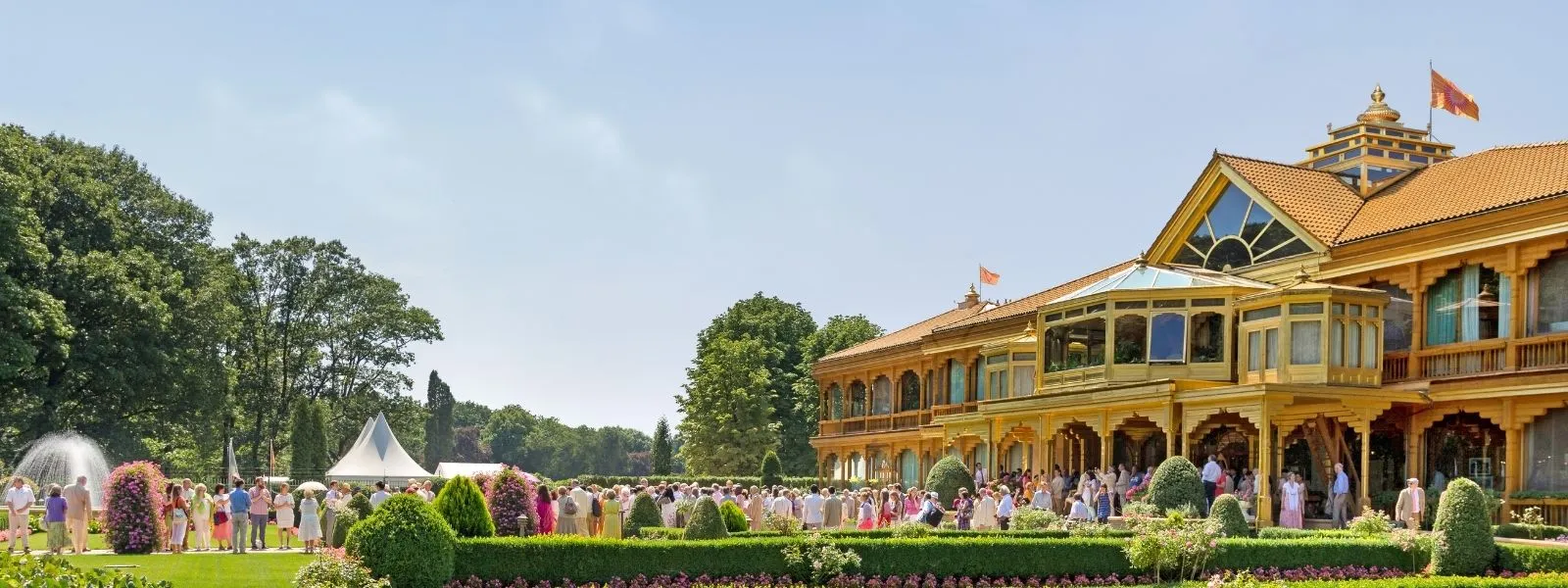
Around the pond in front of Maharishi's Peace Palace, or further if you want it. A short walk after the main meal is part of the routine rather than an extra.
Early Afternoon — Rest
Real rest, not activity dressed up as rest. An hour, lying down, no screen.
Mid-Afternoon — the Supporting Treatment
Shorter than the morning one and chosen to carry it further — a Vasti where warm oil is held on one place, PadAbhyanga on the feet, Netra Tarpana for the eyes.
Late Afternoon — Spiced Milk, and Whatever You Have Asked For
Chai or warm spiced milk. These are the Vata hours, which make a good time to sit and listen and a poor one to exert yourself.
If you have asked for it: a talk, live or from our filmed Ayurveda library, on your constitution, on daily routine, or on how a particular therapy is given. A tour of Maharishi's Peace Palace. An asana session. Or nothing at all, which is a real option and the one the day is built around.
18:30 — Dinner
Small and early. Soup, or a light warm dish. Slightly hungry at bedtime is the intention rather than an accident — digestion should be finished well before sleep.
Evening
Talks are sometimes given after dinner. Otherwise: reading, a bath, the forest at dusk.
The Vedic Pandits recite on the campus. There is nothing to attend and it is not a performance — but the sound carries.
By Ten — Sleep
Before the hours that will give you a second wind at midnight, which is the most reliable way to sleep badly here.
Three ways to be here
The days look much the same. What differs is the preparation beforehand, the kind of treatments given, and the number of them — an Experience usually carries slightly fewer.
On Panchakarma your Vaidya sets the sequence and it changes as the cleanse moves through its stages. Your food is cooked for the stage you are at rather than chosen by you, and on a purgation day there is no treatment at all and no solid food — kanji water and herbal teas.
You are on the campus for a few hours rather than a day. Come a little early, walk in the grounds, and give yourself somewhere quiet to go afterwards rather than straight back to the car.
Named, but not scheduled
None of it runs to a timetable. Tell us what interests you before you arrive, or ask when you are here, and we will arrange what we can.
A tour of the Peace Palace, with guided Pranayama
Maharishi Yoga Asana demonstrations
Talks, live or from our filmed library
Bicycles, straight into the forest
The forest itself, at the edge of the campus
Nothing is compulsory, and nobody will fill your afternoon for you.
If you want to go further
De Meinweg is eighteen square kilometres of forest, heath, ponds and stream valleys, wrapped by Germany on three sides. Two things in it are worth the walk: the Sint Ludwig boardwalk, which crosses the marsh and is named after the college that is now this campus, and the Rolvennen, a chain of small ponds that is the quietest place for miles.
Sint Odiliënberg is a few kilometres away, and Thorn — the white village, whitewashed in the eighteenth century to hide bricked-up windows after a window tax — is about half an hour by car. Roermond, with its old town and the water of the Maasplassen, is fifteen minutes.
Now the practical part
Three lengths, and the difference between them is simply how many days you get.
An Afternoon
A single treatment, booked online, with no consultation and no programme.
One, Three or Five Days
An Ayurvedic Experience — the day above, with the treatments chosen for you and nothing to organise once you arrive.
Seven Days or More
Panchakarma, where the days above are given a sequence and become a cleanse.
If you are not sure which, the discovery call takes twenty minutes and costs nothing.
Ask Us to Call You Book a Treatment Online Compare the Programmes
Continue exploring
Panchakarma · Ayurvedic Experiences · Ayurvedic Spa · The Place & Getting Here